Does tretinoin cause purging?
The short answer
Probably not, and somebody checked.
Tretinoin is already the active form, so it binds retinoid receptors directly with no conversion step. It is the molecule almost every flare study actually tested.
If it isn’t a purge, what is it?
Retinization, harder. The reviews that put tretinoin ahead of everything else for photoaging and acne say in the same sentence that tolerability is what limits its use. That is a statement about stinging and peeling, not about spots.
That distinction is not pedantry. A purge is something to wait out, so the advice that follows from it is keep going. Irritation is a barrier problem, and the advice that follows from it is the opposite: less often, less product, more moisturiser. Being told the wrong one costs weeks.
What was actually measured
The only numbers anyone has published come from a discussion of three tretinoin trials, which counted how many people had more inflammatory spots at week two than at the start.
| Treatment arm | Patients with more spots at week two |
|---|---|
| Mild acne at the start | |
| Tretinoin | 15.4% |
| Vehicle (no active) | 8.7% |
| Combination | 7.6% |
| the one row that looks like a purge | |
| Moderate acne at the start | |
| Tretinoin | not reported |
| Vehicle (no active) | not reported |
| Combination | 8.5% |
| clindamycin alone 11% | |
| Severe acne at the start | |
| Tretinoin | not reported |
| Vehicle (no active) | 23.8% |
| Combination | 12% |
| the vehicle flared most | |
The one that does look like a purge is the top group: 15.4% on tretinoin against 8.7% on vehicle in mild acne. It is a real difference and it is small, and it is the only one of its kind in the literature.
And those numbers were measured on which molecule?
Not necessarily the one you bought. Skin cannot use retinol as it comes: it converts it, in steps, and only the molecule at the end of the chain binds the receptor.
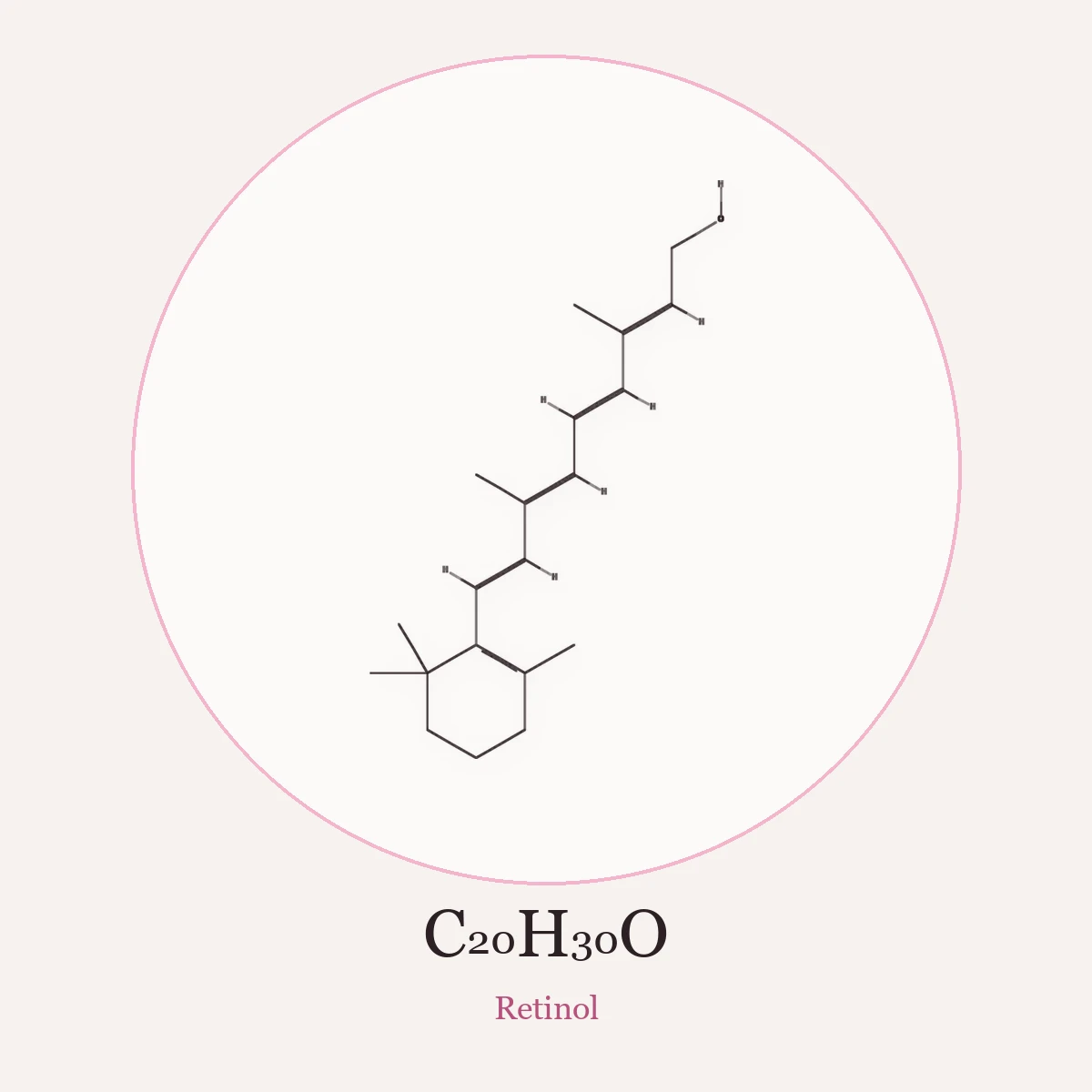
What you can buy. Two conversions from doing anything.
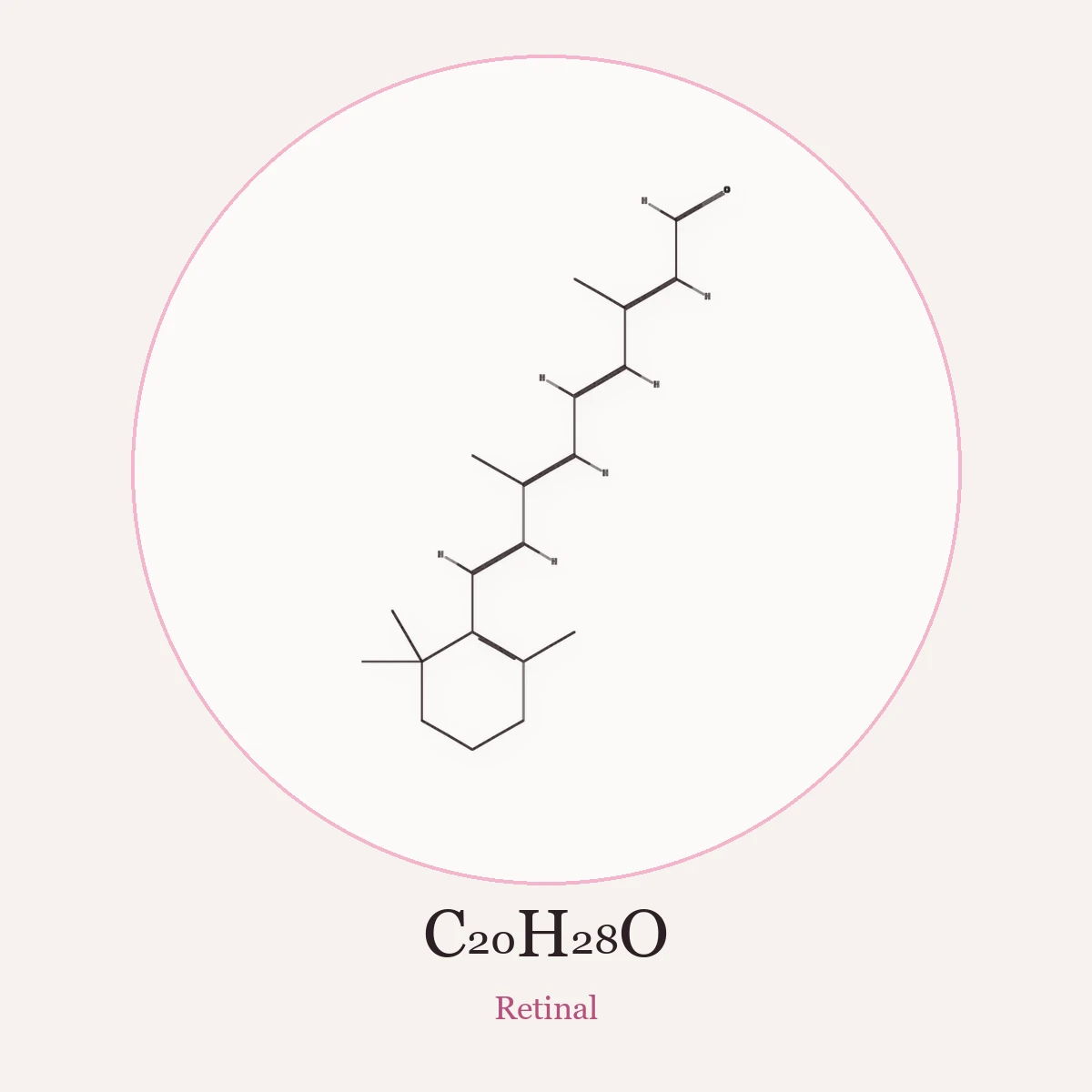
Also sold over the counter. One conversion left.
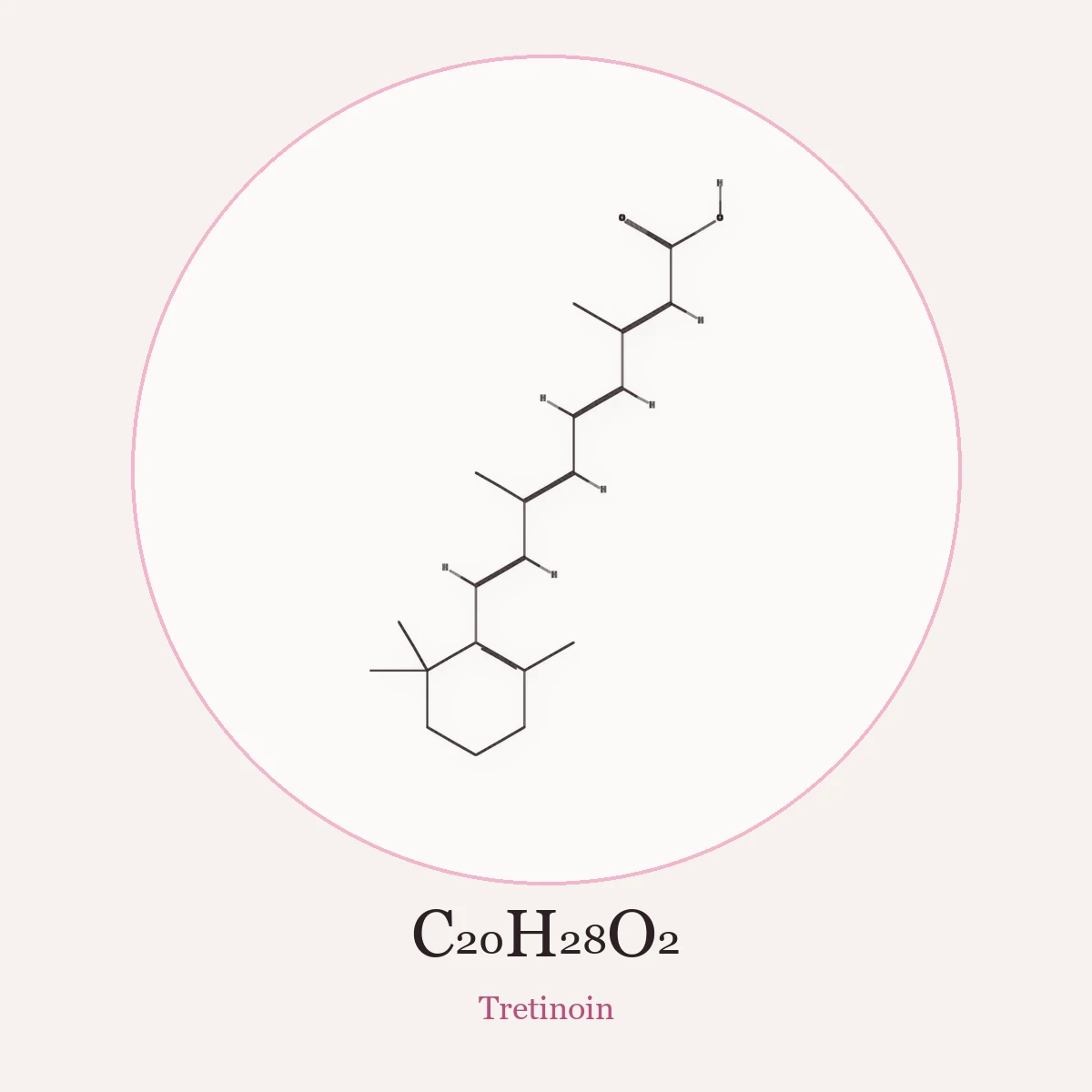
The active form. Prescription only, and the one that was tested.
You are here
What is real, and when it actually happens
Irritation is measured, repeatedly, including by regulators reviewing the products themselves. It is not the same thing as more spots, and it does not run on the timetable the internet gives it.
Most of the signs and symptoms of local tolerability were mild or moderate in severity with the peak of severity at week 1 and a gradual reduction during the twelve weeks of treatment.
Week one. Not week four to six.
The rule everyone repeats has never been tested
The rule that purging appears where you normally break out, and a reaction appears somewhere new, has never been tested. It is not defined as a variable in any trial we could find. Every published attempt to detect a flare counted lesions, not where they were.
You will not find this on a cosmetic label
Tretinoin is prescription-only, so it appears on none of the products we decode. That is worth knowing on its own: advice written for it does not transfer to the retinol you can buy, and the reverse is just as true. Retinol has to be converted twice inside the skin before it becomes this molecule, and a conversion step is not a formality — it is why the two have different timelines and different tolerability.
If you are on tretinoin and something is happening to your face, the person who prescribed it is the right person to tell. Nothing on this page is a reason to stop or to push on.
What else in your routine could be doing this
The single most common answer to “why is my skin worse since I started tretinoin” is that tretinoin is not the only thing that changed, or is not the only active in the routine. These are the pairings our conflict engine flags, with the reason for each.
ClashRetinoids and exfoliants both speed up cell turnover, so together they tend to stack irritation and can wear down your barrier.
ClashBenzoyl peroxide can break most retinoids down, and together they often over-irritate, so you can lose the retinoid and gain redness.
CarePure vitamin C and retinoids prefer different pH levels, so layered together they can be a little less effective and more irritating.
CareSponge spicules open physical channels, so what you apply with them lands deeper. Irritation included, which is why a prickling in the first days has a mechanical cause here as well as a chemical one, and is not on its own a sign the active is too strong for you. The penetration itself is measured, in laboratory and animal studies whose abstracts are all we have read, and no trial has tested this pairing in a finished product.
Each of those links opens the full pairing, with what to do about it and how to place both in a routine. There is also a conflict checker for the rest of your shelf.
What we know about tretinoin
- Irritation risk
- high
- In pregnancy
- avoid
- Useful at
- effective above 0.025%
- Evidence overall
- strong
The full entry, with scores and sources, is on the tretinoin page.
Tretinoin and purging, answered
Does tretinoin cause purging?
Probably not, and somebody checked. Tretinoin is already the active form, so it binds retinoid receptors directly with no conversion step. It is the molecule almost every flare study actually tested.
How long does tretinoin purging last?
Nobody has measured it, because no trial has ever defined a purge as something to count. What has been measured is irritation, and regulators reviewing these products put its peak in week one, not the four to six weeks consumer advice tells you to endure. Our own entry rates tretinoin's irritation risk as high.
Is this tretinoin purging, or a breakout?
The rule everyone repeats — that a purge appears where you normally break out and a reaction appears somewhere new — has never been tested in a clinical trial. With tretinoin the likelier explanation is this: Retinization, harder. The reviews that put tretinoin ahead of everything else for photoaging and acne say in the same sentence that tolerability is what limits its use. That is a statement about stinging and peeling, not about spots.
How we know this
- Yentzer BA, McClain RW, Feldman SR. Do topical retinoids cause acne to "flare"? J Drugs Dermatol. 2009 Sep;8(9):799-801.PMID 19746671Review of the clinical-trial literature, searching specifically for evidence of initial worsening.
No primary data from clinical trials were identified to support the dogma of acne worsening secondary to topical retinoids.
Abstract read in full at PubMed, 2026-08-08. - Leyden JJ, Preston N, Johnson LA, Gottschalk R. Effects of topical retinoid therapy on acne lesions: a psychometric assessment. Cutis. 2012.PMID 22908733Re-analysis of adapalene trial data, testing three separate definitions of a flare: a 5%, a 10% and a 20% rise in inflammatory lesions after the first week.
no evidence of worsening or a flare was seen by either the VLS model or percentage-based definitions
Abstract read at PubMed, 2026-08-08. - Del Rosso JQ. Retinoid-induced flaring in patients with acne vulgaris: does it really exist? J Clin Aesthet Dermatol. 2008 May.PMID 21103310Editorial discussion of data from three trials of a clindamycin 1.2% / tretinoin 0.025% gel. Not itself a trial, and no funding is disclosed.Full text read at PMC, 2026-08-08. The severe-acne row is read off the figures.